
A long walk to freedom

Objectif de communication

  • comprendre, demander et donner des renseignements biographiques

Objectifs linguistiques

  • les questions au prétérit simple
  • l’intonation des questions
  • le vocabulaire de la thématique (activism and politics)

Contents

Enter password:

Apartheid - When discimination is law

  • Nouveau vocabulaire : Apartheid et discrimination
  • Compréhension d’image et de texte : BD Timeliners
  • Compréhension audio : Comprendre l’apartheid
  • Expression écrite : Court journal intime

Vocabulary Kit

Key Vocabulary

  • Apartheid = Apartheid
  • Segregation = Ségrégation
  • Racial = Racial(e)
  • Discrimination = Discrimination
  • Government = Gouvernement
  • Strict = Strict(e)
  • Neighborhood = Quartier
  • Opponent = Opposant(e)
  • Right (legal) = Droit
  • Protest = Protester / Manifestation
  • Protester = Manifestant(e)
  • Unfair = Injuste

More Advanced Words

  • Election = Élection
  • Law = Loi
  • Leader = Leader / Dirigeant(e)
  • Prison = Prison
  • Vote = Vote / Voter
  • End (verb) = Mettre fin à
  • Freedom = Liberté
  • Human rights = Droits de l’homme
  • Oppression = Oppression
  • Inequality = Inégalité
  • Justice = Justice
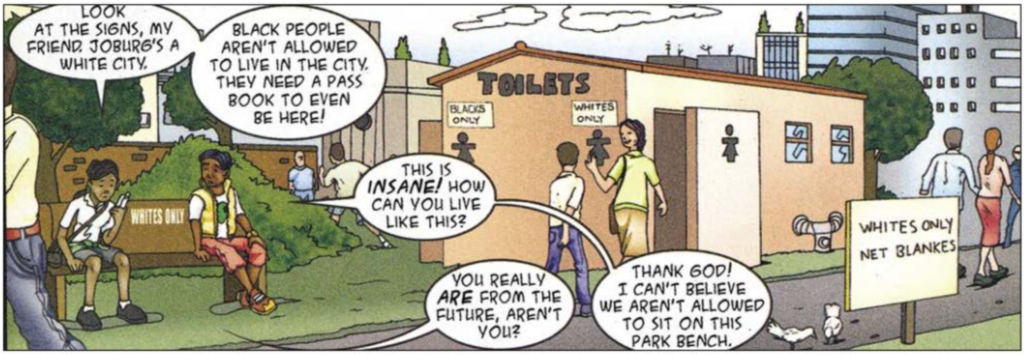
Timeliners 1, Soweto in Flames. 2001. Apartheid Museum

1. Observe and React

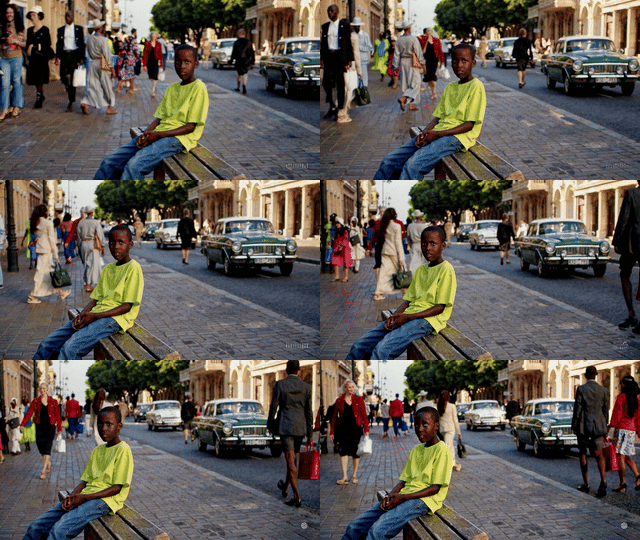
Neo is a South African boy who lives in Jozi in the 2000s. One day he travels back in time and finds himself in Joburg, South Africa, in 1976.

Look at the comic strip. Identify and read the different signs and inscriptions. What do you understand about life in Johannesburg in 1976?

  • What do the signs tell us about society at the time?
  • How does this situation make you feel?
  • How would you react if you were in Neo’s position?

Possible Answers: Observe and React

Observations from the comic strip:

  • Signs like « Whites Only » and « Blacks Only » → Indicate racial segregation and discrimination.
  • Neo’s shocked reaction → Shows that this situation is shocking to someone from the future.
  • The need for a passbook → Highlights the restrictions placed on Black people’s movement.
  • Separate toilets for different races → Demonstrates enforced social division.
  • The contrast between characters → Some see segregation as normal, while Neo is outraged.

Personal Reactions:

  • « I find it shocking that people were separated in every aspect of life. »
  • « It’s unfair and cruel that people were treated differently based on their skin color. »
  • « I can’t imagine living in a society where I don’t have the same rights as others. »

2. Analyze the Speech Balloons

Read the speech bubbles and find the elements describing life in Johannesburg in 1976.

  • Identify what Neo says and highlight his reactions.
  • Find one adjective that best describes Neo’s reaction.

Possible Answers: Speech Balloons Analysis

Highlighted elements describing life in Johannesburg in 1976:

  • « Black people aren’t allowed to live in the city. They need a passbook to even be here! » → This shows racial segregation and restrictions on movement.
  • « Whites only » / « Blacks only » signs → Indicate systemic discrimination in public spaces.
  • « This is insane! How can you live like this? » → Neo’s reaction shows disbelief and frustration.
  • « Thank God! I can’t believe we aren’t allowed to sit on this park bench. » → Highlights the absurdity of segregation.
  • « You really are from the future, aren’t you? » → Suggests that for those living in apartheid, this level of discrimination was seen as ‘normal.’

One adjective to describe Neo’s reaction: Shocked / Outraged / Disbelieving

3. Understanding Apartheid

Listen and explain what apartheid was. You can copy important information from the audio, or explain in your own words.

Prepare to read your text to the rest of the class.

Apartheid was a system of racial segregation in South Africa between 1948 and 1991. The government made strict laws separating white and Black people. They could not go to the same schools, live in the same neighborhoods, or even use the same buses. Black South Africans had fewer rights and could not vote. Many people protested against this unfair system. One of the most famous leaders was Nelson Mandela. He was sent to prison for 27 years because he fought against Apartheid. In 1994, Apartheid ended, and Mandela became the first Black president of South Africa.

Culture Box

Apartheid, qui se prononce /əˈpɑː.teɪt/, est à l’origine un mot afrikaans (langue germanique issue du néerlandais) signifiant « séparation, mise à part ».

Trucs et Astuces

Pour vérifier le sens d’un mot, pense à utiliser des dictionnaires en ligne, par exemple :

mettre fin à
injuste
droits de l'homme
inégalité
gouvernement
voter
stricte
quartier
justice
discrimination
liberté
dirigeant(e)
manifestation
droit
oppression
loi
ségrégation
prison
Previous
Next

Final Task

Imagine that you are Neo, traveling back in time to 1976. Write a short diary entry expressing your thoughts and emotions after experiencing apartheid firsthand.

Nelson Mandela - Struggle and Triumph

  • Vocabulaire : Activisme et politique
  • Compréhension d’image : Nelson Mandela
  • Compréhension orale : La biographie de Nelson Mandela
  • Recherche et organisation des dates clés
  • Expression écrite : Une lettre à Nelson Mandela

Vocabulary Kit

Activism and Politics

  • Run = Diriger un pays
  • Struggle = Lutter
  • Join a movement = Rejoindre un mouvement
  • Be elected = Être élu
  • Release = Libérer

Trucs et Astuces

N’essaie pas de tout comprendre dans le document, mais concentre-toi sur les mots accentués et utilise les photos pour deviner quels mots tu risques d’entendre.

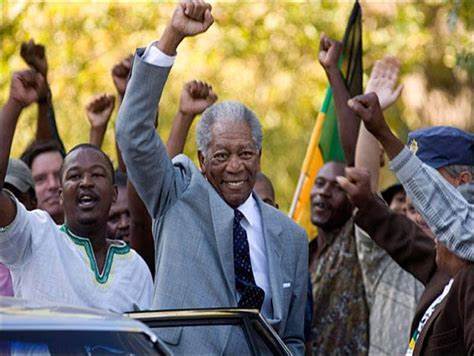
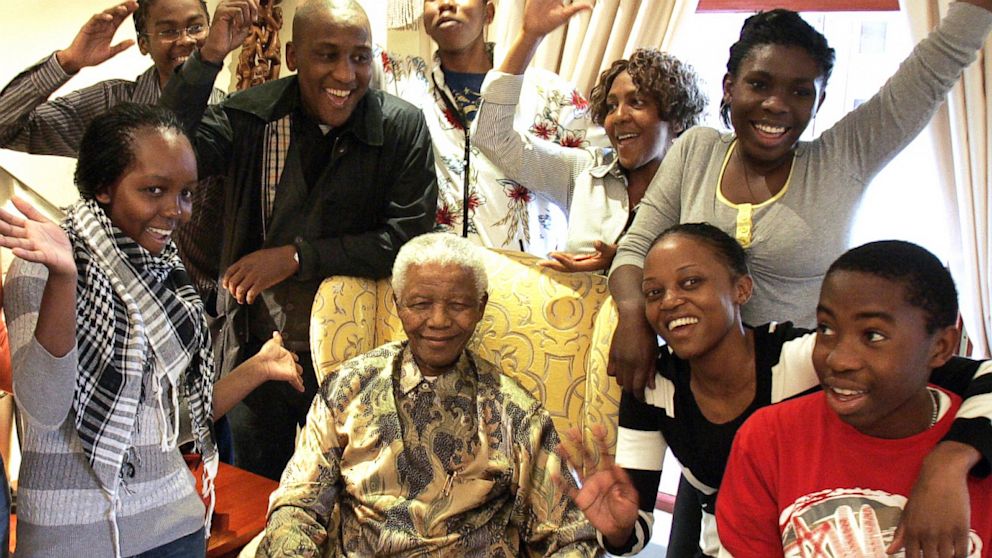
1. Observe and Guess

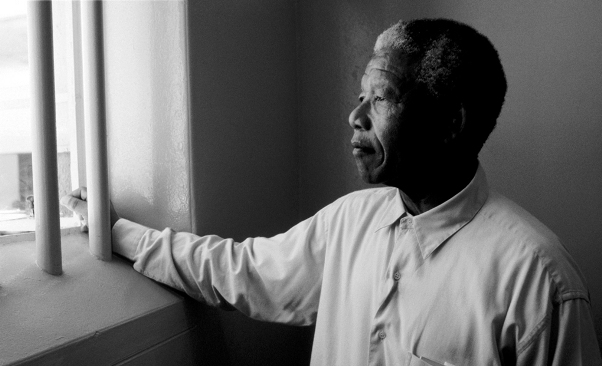
Look at the photo of Nelson Mandela. Discuss these questions with your classmates:

  • Who do you think he is?
  • Where do you think he is in the photo? Why?
  • What kind of life do you think he had?

Write down your guesses. Then, listen to the biography and check your answers.

After serving 27 years in prison, Nelson Mandela helped end apartheid in South Africa and became his country’s first democratically elected president.

Born in South Africa’s Cape Province on July 18, 1918, Nelson Mandela joined the African National Congress (ANC) Youth League in 1942 and directed active civil disobedience against the South African government. Mandela was an active opponent of apartheid.

After the 1960 Sharpeville massacre, where police killed 69 and wounded 180 unarmed protesters, Mandela became more militant. Three years later, in 1963, Mandela and ten others were sentenced to life in prison for sabotage and conspiracy to overthrow the government. During his incarceration, Mandela gained international attention.

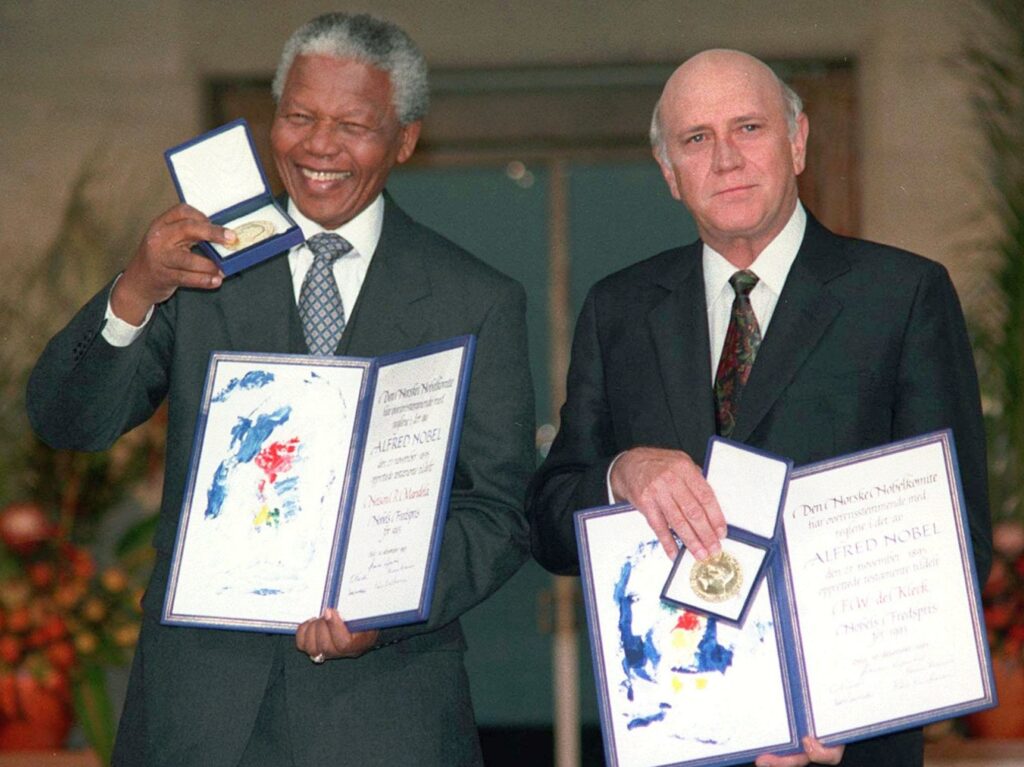
On February 11, 1990, South African president de Klerk released Mandela from prison. Three years later, both men were awarded the Nobel Peace Prize for their work on ending apartheid. On May 10, 1994, at the age of 77, Mandela was elected President of South Africa.

Nelson Mandela passed away on December 5, 2013, at the age of 95.

2. Listening Task

Listen to the biography of Nelson Mandela. While listening, write down all the numbers and dates you hear.

Tip: Focus on important words, names, and key events:

  • 18th of July, 1918 → Nelson Mandela was born in South Africa’s Cape Province.
  • 1942 → 
  • 1960 → 
  • 18th of July, 1918 → Nelson Mandela was born in South Africa’s Cape Province.
  • 1942 → Mandela joined the African National Congress (ANC) Youth League.
  • 1960 → Sharpeville Massacre: Police killed 69 protesters, making Mandela more militant.
  • 1963 → Mandela was arrested for sabotage and conspiracy.
  • 1990 → Mandela was released from prison after 27 years.
  • 1993 → Mandela and South African president de Klerk received the Nobel Peace Prize.
  • 10th of May, 1994 → Mandela became the first Black president of South Africa.
  • 5th of December, 2013 → Mandela passed away at the age of 95.

3. Organizing Key Events

Now, listen again and answer the following questions.

  1. How long was Mandela in prison?
  2. When was he released?
  3. When did he become President?
  4. When did he receive the Nobel Peace Prize?
  5. When was he born?
  6. When did he pass away?
  1. How long was Mandela in prison? 27 years
  2. When was he released? 11th of February, 1990
  3. When did he become President? 10th of May, 1994
  4. When did he receive the Nobel Peace Prize? 1993
  5. When was he born? 18th of July, 1918
  6. When did he pass away? 5th of December, 2013

4. Discussion: Why Was Nelson Mandela Famous?

With your classmates, recap the main events of Mandela’s life. Discuss:

  • What made Mandela an important figure?
  • How did he change South Africa?
  • What can we learn from his story?

Prepare to share your ideas with the class.

Final Task

Imagine you could write a letter to Nelson Mandela. What would you say to him? 
100 mots / 30 mins

Guiding Questions:

  • What do you admire most about him?
  • What questions would you ask?
  • How has his story inspired you?

Les mots interrogatifs

  • Activité principale : leçon courte sur les question words + tableau à compléter
  • Compétences / objectifs : revoir et mémoriser les mots interrogatifs en anglais ; savoir associer chaque question word à son sens ; compléter un tableau de leçon
  • Culture / lexique : who, what, when, where, why, how, how old, how long, how much / how many ; repères autour de Nelson Mandela

1. Say the question words

How old was Nelson Mandela when he went to prison?
Where was he born?
When did he join the ANC?
How much do you know about Mandela?
Who played Nelson Mandela?
How long did he stay in prison?
Why did he go to prison?
What was the ANC?
How many wives did he have?
What was his clan name?
How did he become famous?

Grammar Kit

Copy and complete the table.
Copie et complète le tableau.

French English
qui
que / quoi / quel
quand
l’âge
la quantité
la longueur
la cause
comment

Les questions au présent et au prétérit simple

  • Activité principale : Évaluation orale – traduction de questions (FR → EN) à partir d’un générateur aléatoire.
  • Compétences / objectifs : Comprendre une question en français et la traduire correctement en anglais à l’oral (structure des questions au prétérit et au présent).
  • Culture / lexique : Nelson Mandela, apartheid, Sharpeville, histoire de l’Afrique du Sud.

1. Questions with the Verb Be

Copy and underline the verb be in red and the subject in green.
Copie et souligne le verbe be en rouge et le sujet en vert.
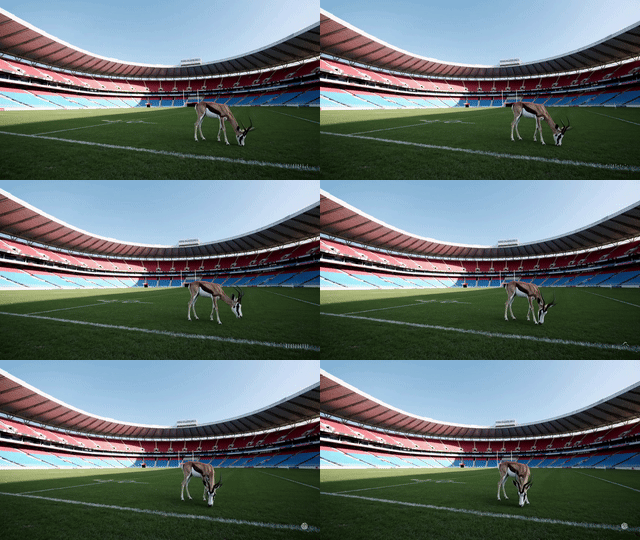
• Why is he famous?
Were there any black players in the Springboks?
• How old was he when he became president?
Springbok in stadium

Grammar Kit : Les questions avec be

  • Pour former une question avec le verbe be au présent ou au prétérit simple, on / l’auxiliaire do.
  • Comme be est / un auxiliaire, il / à lui-même.
  • L’ordre des mots :
    (mot / +) / conjugué + / (+ compléments) ?
Nelson Mandela with his family

2. Questions with Auxiliary Do

Copy and underline the verb in red, the auxiliary in blue, and the subject in green. Underline the question words.
Copie et souligne le verbe en rouge, l’auxiliaire en bleu et le sujet en vert. Souligne aussi les mots interrogatifs.

Does he have any children?
When did he get elected president?
Did he live under apartheid?
What did he do?

Grammar Kit : Les questions avec l’auxiliaire do

  • Pour former une question au présent ou au prétérit simple, on utilise l’auxiliaire / .
  • C’est lui qui est conjugué : / au présent simple et / au prétérit simple.
  • Le verbe est / .
  • L’ordre des mots :
    (mot / +) auxiliaire / conjugué + / + / (+ compléments) ?

3. Subject Questions

Copy and underline the verb in red and the subject in green.
Copie et souligne le verbe en rouge et le sujet en vert.
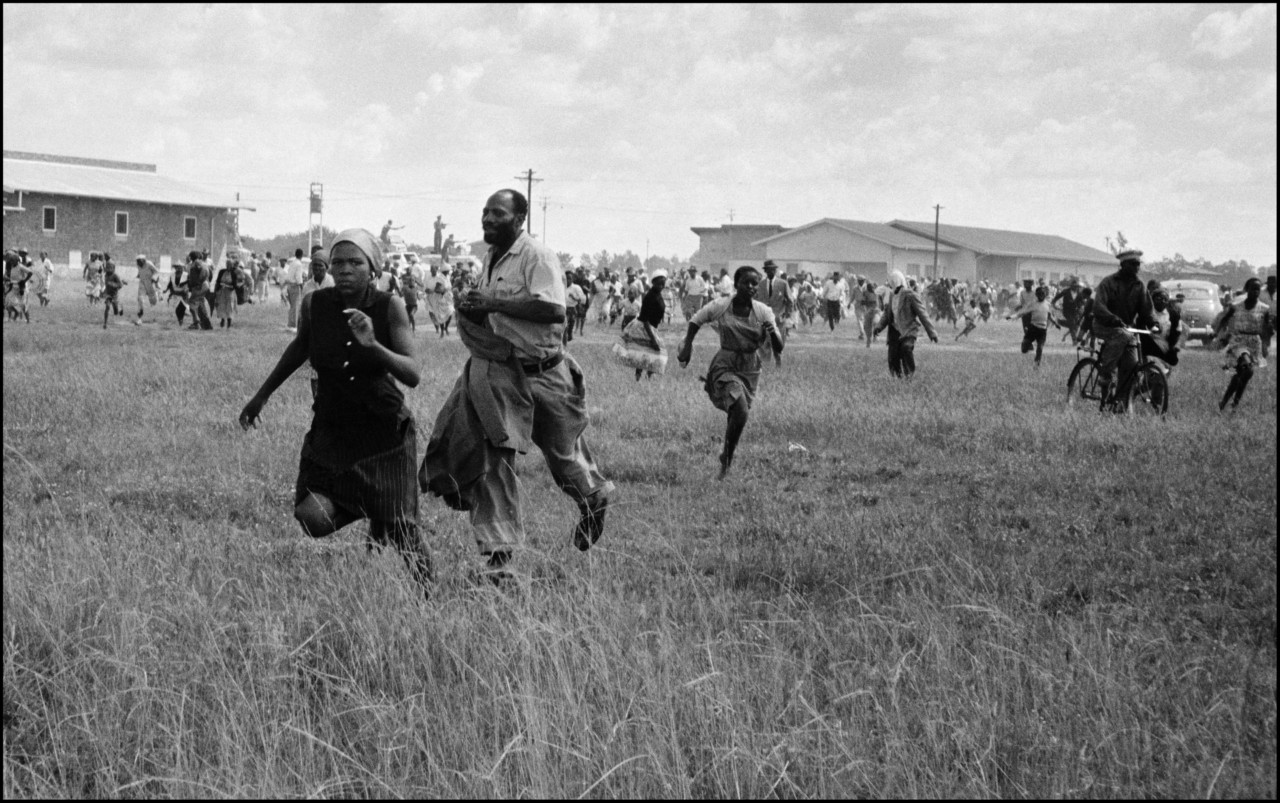
Who released Nelson Mandela from prison?
What happened in 1960 in Sharpeville?
Sharpeville

Grammar Kit : Interrogation sur le sujet

  • Lorsque le mot interrogatif est le / du verbe, on n’utilise pas l’auxiliaire / .
  • L’ordre des mots :
    mot / + / conjugué (+ complément) ?

4. Tableau récapitulatif.

Si le verbe est be (mot +) conjugué + (+ compléments) ?
Autres verbes (mot +) auxiliaire conjugué + + (+ compléments) ?
Mot interrogatif sujet mot + conjugué (+ complément) ?

4. Word order challenge

You have 5 minutes to make as many questions as possible.
Tu as 5 minutes pour former le plus de questions possible.

Time left: 05:00
Score: 0 / 10
1.
2.
3.
4.
5.
6.
7.
8.
9.
10.

Oral Evaluation

Translate the French question into English.
Traduis la question française en anglais.

Student number
Question in French
Correct question in English

Unconquered, unsubdued, invincible

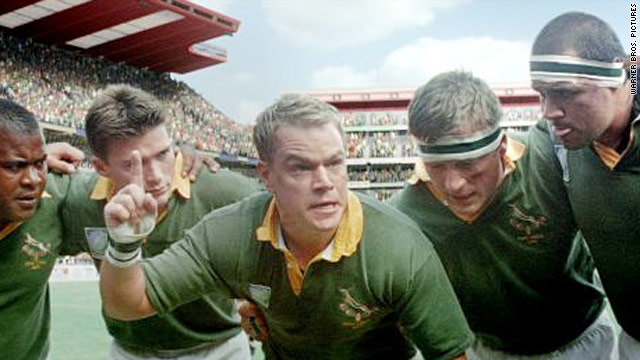
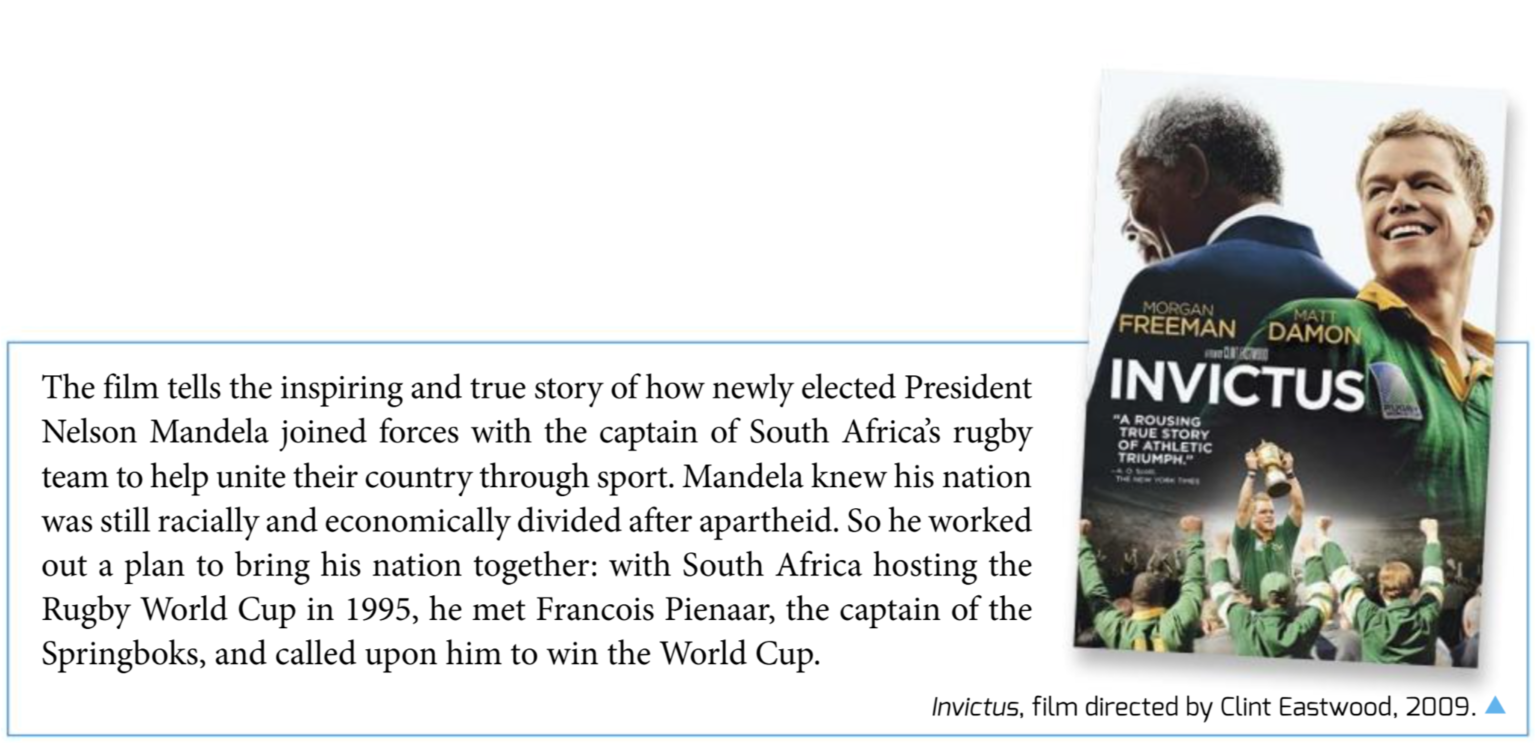
  • Activité principale : exploitation du film Invictus : observation de l’affiche, repérage des éléments d’un plot summary, lexique en contexte, rédaction d’un court résumé et discussion de groupe
  • Compétences / objectifs : comprendre et décrire une affiche de film ; identifier les éléments d’un résumé (setting, characters, storyline, type/genre) ; déduire le sens de mots à partir du contexte ; rédiger un court résumé ; échanger à l’oral pour exprimer et justifier une opinion
  • Culture / lexique : Invictus, Nelson Mandela, Afrique du Sud, rugby, apartheid, plot summary, setting, characters, storyline, type / genre, true story, bring together, unite

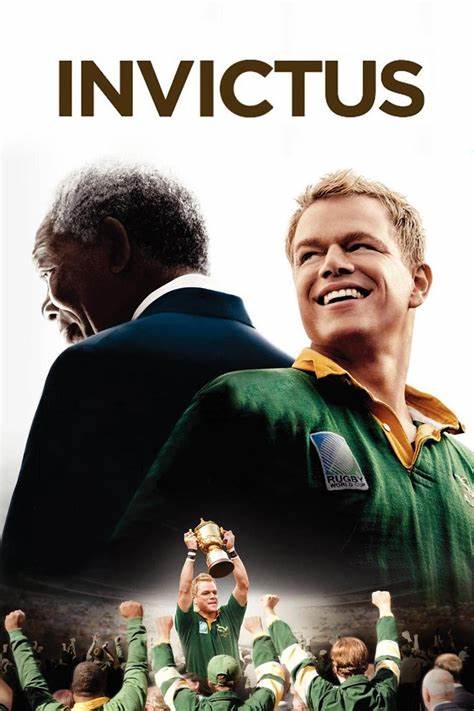
1. Look at the film poster and predict the plot

Observe the film poster and describe what you see.
Imagine what the story could be about.
Observe l’affiche du film et décris ce que tu vois. Imagine de quoi l’histoire pourrait parler.

  • Who do you see on the poster?
  • What sport is involved?
  • What kind of atmosphere does the image create?
  • Based on the title, what do you think Invictus means?
Invictus scrum scene

2. Copy and identify the elements of a plot summary.

A plot summary usually contains certain elements.
Un résumé de film contient généralement certains éléments.

Copy the relevant ones:
Copie les éléments pertinents.

  • Setting (place and time)
  • Characters
  • Actors
  • Opinion about the film
  • Storyline
  • Type / Genre

3. Read the plot summary of Invictus and identify different elements.

Take the handout and read the plot summary.
Open the handout (PDF)

Use one color for each element.
Prenez la fiche et lisez le résumé du film. Utilisez une couleur différente pour chaque élément.

  • Setting – Place and time
  • Characters – Who is in the story?
  • Storyline – What happens in the film?

Elements

Setting

Characters

Storyline

4. Guess the meaning of the words from the context.

Use the plot summary to find the meaning of these words.
Utilise le résumé du film pour retrouver le sens de ces mots.

true story:
still:
worked out:
bring together:
hosting:
called upon him:
Nelson Mandela celebrating victory

5. Write a short summary of the film.

In one or two sentences, summarize what the film is about.
En une ou deux phrases, résume de quoi parle le film.

Grammar Kit

Le prétérit (past simple) est utilisé pour poser des questions sur des événements passés.

  • Where was he in prison?
    = Où était-il en prison ?
  • Did he win the election?
    = A-t-il gagné l’élection ?
  • Who released him from prison?
    = Qui l’a libéré de prison ?

6. Group discussion

Discuss these questions in pairs or small groups.
Discutez de ces questions en binômes ou en petits groupes. Vous pouvez répondre en anglais ou en français.

  • Why do you think Mandela chose rugby to unite his country?
    Prompts: South Africa – white / black population – popular sport – national team – symbol of unity

  • Do you think sport has the power to bring people together? Why?
    Prompts: national pride – teamwork – emotions – big competitions – shared celebrations

  • Can you think of another example where sports helped unify people?
    Prompts: World Cup – Olympic Games – national victories – famous teams – historic matches

Prepare to share your ideas with the rest of the class.
Préparez-vous à présenter vos idées au reste de la classe.

United in celebration

  • Compréhension vidéo : scène d’ouverture d’Invictus
  • Réactions, différences raciales
  • Compréhension vidéo : scène finale d’Invictus
  • Expression écrite et orale : imagine que tu étais un(e) spectateur(rice)

Culture box

Invictus, qui signifie « invaincu, invincible » en latin, est en fait le titre d’un poème de William Ernest Henley. Il s’agissait du poème préféré de Nelson Mandela.

1. Observe and Describe

Watch the opening scene of Invictus. Work in groups of four, two people turn their back to the board.

  • Group A: Listen and watch the scene, explain to the other group what happens.
  • Group B: Listen to the scene. Ask questions if you don’t understand something.

2. Copy and Complete the Table

Watch the opening scene again and take notes about the people and their reactions.

White peopleBlack people
Who?…Who?…
Place…Place…
Clothes…Clothes…
Activity…Activity…
Feelings / Reactions…Feelings / Reactions…
White peopleBlack people
Who?
Rugby players + coach
Who?
Kids
Place
Rugby field (pitch) / green
Place
Neglected field / no grass
Clothes
Rugby jerseys + shorts
Clothes
Old / torn clothes
Activity
Play rugby
Activity
Play football
Feelings / Reactions
Stop playing – curious – annoyed – watch
Feelings / Reactions
Stop playing – joyful / enthusiastic – shout Mandela’s name

3. Listening Task

Listen carefully to the people in the scene and answer the following questions.

  • Who is in the car? …………………………………
  • What word does the white man use to describe this person? …………………………………
  • How do the black children react? …………………………………
  • What do the rugby players do? …………………………………
  • Who is in the car? Nelson Mandela is in the car
  • What word does the white man use to describe this person? He calls Mandela a terrorist
  • How do the black children react? They are happy and excited to see Mandela
  • What do the rugby players do? They stand in shock, they are disgusted

4. Discussion

Recap a partner: Compare how black and white people react in the scene. Explain how they reacted on February 11, 1990, the day of Mandela’s release.

Prepare to share your ideas with the rest of the class.

5. Take Notes on the Final Scene

Watch the final scene and take notes.

  • People: ……………
  • Places: ……………
  • What happens? ……………
  • People’s reactions and feelings: ……………
  • People’s actions: ……………

5. Take Notes on the Final Scene – Answers

  • People: rugby players – supporters – referee – black and white people – Nelson Mandela
  • Places: Stadium – South Africa – a home – a bar
  • What happens? end of the rugby match – victory of the Springboks
  • People’s reactions and feelings: joyful – happy – excited
  • People’s actions: smile – shout – jump – kiss each other – hug each other – wave flags

Final Task

Imagine the moment: Imagine you were a South African on June 24, 1995, and you witnessed the victory. Write a few sentences describing what you saw and how you felt.

Prepare to read your text to the rest of the class

Worksheet

  • Vocabulaire
  • Les questions au présent et au prétérit simple
  • Les mots interrogatifs 

Activité 1

  • Activité principale : à modifier
  • Compétences / objectifs : à modifier
  • Culture / lexique : à modifier

{{BLOCK_INTRO_EN}}
{{BLOCK_INTRO_FR}}

  1. {{Q1_EN}}
    {{Q1_FR}}
  2. {{Q2_EN}}
    {{Q2_FR}}
  3. {{Q3_EN}}
    {{Q3_FR}}
  4. {{Q4_EN}}
    {{Q4_FR}}

{{INSTR_EN}}
{{INSTR_FR}}

  • {{CAT1_TITLE}}

    {{CAT1_ANS_EN}}

    {{CAT1_ANS_FR}}

  • {{CAT2_TITLE}}

    {{CAT2_ANS_EN}}

    {{CAT2_ANS_FR}}

  • {{CAT3_TITLE}}

    {{CAT3_ANS_EN}}

    {{CAT3_ANS_FR}}

Script — {{SCRIPT_TITLE}}

{{NARRATOR}}: {{EN_TEXT1}} {{EN_TEXT2}}

{{NARRATOR}}: {{EN_TEXT3}} {{EN_TEXT4}}

Vocabulary Kit — {{SUBTITLE}}

  • = {{WORD1_FR}}
  • = {{WORD2_FR}}
  • = {{WORD3_FR}}
  • = {{WORD4_FR}}
  • = {{WORD5_FR}}
  • = {{WORD6_FR}}

{{QUESTION_INTRO_EN}}
{{QUESTION_INTRO_FR}}

{{TASK_INSTR_EN}}
{{TASK_INSTR_FR}}

{{TASK_SUBTEXT}}

  • ✔ {{FEEDBACK_TRUE}}
  • ✘ {{FEEDBACK_FALSE}}
  • ✔ {{FEEDBACK_TRUE}}

Question

Copy and complete the text using the words below.
Copie et complète le texte en utilisant les mots ci-dessous.

The photo shows . It is an building in the .

Words

WORD 1 WORD 2 WORD 3

Question

Copy and complete the text using the words below.
Copie et complète le texte en utilisant les mots ci-dessous.

The photo shows . It is an building in the .

Words

Grammar Kit

Information in French should be written like this.

Information in English should be written like this.

Grammar Kit

Example sentence 1.
Example sentence 2.

  • Instruction text / .
  • Instruction text / .

Trucs et astuces

Grammar rules / culture rules should be written like this, or like this if it is in French.

Take the document The rise of slow furniture.